Extensions are a Double-Edged Sword

A sword resting on a stack of old books
“Albion Europe Photo Contest 2012 High res” by Søren Niedziella is licensed under CC BY 2.0

I don’t think I’ve ever said no to an extension request from a student, but I always ask “What are your plans to catch up?”. I can give students an extension but what I can’t do is stop time. I wish I could – that would be a wonderful superpower. All an extension does is give the student permission to hand in their assignment late. But whilst they’re taking an extra week to write their essay or analyse their data, all the other students are cracking on with the next week of studying. When the student finally hands in their assignment they are already a week behind with the reading and learning. Unless they can somehow compress 2 weeks learning into 1 (or 3 into 2 or whatever) they’re going to need an extension on the next assignment, too. And the next one. But they can’t have an extension on the exam or the end of module assessment, so sooner or later time will catch up with them. That’s what I mean by a double-edged sword.

It’s not the end of the world. I help my students to make catch-up plans when they are behind. I advise them what parts of the module are vital and what parts are skimmable or skippable. I help them make realistic plans to ramp up their study hours temporarily whilst avoiding burnout. Sometimes I recommend they submit an incomplete assignment and push on with the reading, because there just isn’t time to do a thorough job of it and still get good marks in the next assignment or the exam. I explain to them that they may have to come to terms with lower grades than they hoped for when illness or other circumstances mean they aren’t able to study as thoroughly as they otherwise would.

If you’re my student you can always have an extension if you need one. But don’t be complacent about extensions. If a week has passed in which you did no studying (because of illness, or a family crisis, or a busy week at work, or any other reason) then that week has gone and you can’t get it back. You can (probably) still submit your assignment but you are somehow going to have to work extra hours to catch up, or else you are going to have to skip some of the reading and take the hit to your grades. One way or another you are at a disadvantage compared to if you hadn’t needed the extension.

If this article didn’t answer your question, click here

Related content: The Swiss Cheese Study Method: or What To Do When You Get Behind

If The Article Didn’t Answer Your Question

If I am your lecturer and I directed you to a blog article but it didn’t answer your question – I’m sorry. I didn’t write this blog so I could just answer every student query with a link and not bother listening to their problem or giving them specific, tailored advice. Please don’t feel fobbed off. Contact me again and I’ll try to be more helpful.

If your lecturer (who isn’t me) directed you to one of my blog articles but it didn’t answer your question – contact them again and get them to listen to your specific problem and give you personalised advice.

If you are looking for help with a specific study problem and you can’t find the answer here, leave a comment and I may write a future blog post addressing your issue.

Writing In Your Own Words

Close up photo of a page of handwritten writing, with the tip of a ballpoint pen and a glimpse of fingers holding it, in the process of writing. The writing is upside down and not meant to be read but appears to be in German.
“diary writing” by Fredrik Rubensson is licensed under CC BY-SA 2.0

It’s normal to find writing in your own words hard at first. One thing that makes it much harder is when you read one sentence from the textbook, and then try to put that sentence in your own words, and then you read another sentence from the textbook and try to put that into your own words. It’s almost impossible to do that without just paraphrasing, which is a form of plagiarism. What you should do instead is to read a whole paragraph or section of the textbook and then close the textbook and try to explain the key ideas from that section in your own words. When I say “in your own words” I mean in the way you normally talk. You could use a voice recorder app on your phone to record yourself while you explain in words what you just read. Don’t try to sound “academic”, just use your normal way of talking as though you were describing something to a friend. It might sound something like this:

“Ummm, so there was this guy Booth and he did some research in London and he went round people’s houses in every street and made notes about who was living there and their ages and occupations. And he also made some notes about their ummmm I guess, like, their social class or status. And they seemed sort of judgmental calling people some people dirty  and vicious and other people he called respectable. And he coloured in a map with different colours for the different social classes so you can see where the rich people lived and where the poor people lived. It’s important because, erm,  because he was sort of inventing social science, how to do social science”

Then you can write that up into notes, tidying it up a little bit (removing the umms and errs for example) and maybe looking up the odd important detail, such as Booth’s first name and the date:

“Charles Booth did some research in London between 1886 and 1903. He went round people’s houses in every street and made notes about who was living there and their ages and occupations. He also made notes about their social class or status. These notes were sometimes judgmental, for example he called some people dirty  and vicious, and other people he described as respectable. Booth used these notes to make a map with different colours for the different social classes. The map made it so you can see where the rich people lived and where the poor people lived. Booth’s work was important because he was inventing how to do social science. (Book 1, Chapter 1, pages 9-11)”

Now those are your notes, written up in your own words. None of these sentences are the same as the sentences in the textbook. It’s all your words.

When it comes to writing an assignment, you should use your notes as the primary resource and only refer to the textbook for references and to pick up additional details. For example if you were answering a question such as “How does social science differ from other ways of investigating social life, for example journalism or art?” and you wanted to write a paragraph about Booth you might write something like:

“One way that social science differs from other ways of investigating social life is that it attempts to be systematic. For example, one of the first systematic studies of social life in London was a survey done by Charles Booth between 1886 and 1903 (Blakeley and Staples, 2014). By visiting the houses in every street and making notes about who was living there and their social status, Booth produced a colour coded map of the city which showed where the rich people lived and where the poor people lived. This differs from a journalist or an artist because they might only talk to a few people and ask them different questions each time. But Booth visited every house and collected data about the same things in each one i.e. he was systematic. In some ways though Booth’s research was more like journalism or art because he also made moral judgements about people. For example he called some people dirty  and vicious, and other people he described as respectable. Modern social scientists are supposed to avoid making moral judgments like this.”

After some practice you’ll be able to skip the voice recording part and write notes in your own words after reading a paragraph or section.

Step by step guide to writing in your own words

  • DON’T read a sentence from your textbook then try to write that sentence in your own words.
  • DO read a whole paragraph or section of your textbook at a time
  • THEN close your textbook and record yourself explaining the main points of that section in your own words
  • WRITE UP your spoken notes, tidying up the “umms” and “errs” and adding in important details checked from the textbook
  • BASE YOUR ESSAY mainly on your notes, using your textbook for additional details

If this article didn’t answer your question, click here

Related articles

Tease Apart a Quotation Free Download

Procrastination Isn’t Rest

Cartoon titled Getting Started, "Simple Tasks". On the left under a heading Non-ADHD is a figure standing atop a small set of steps. The figure looks angry and is saying "You always make excuses" "It's not that hard" "You need to stop procrastinating" "Just do it" You're just lazy". On the right under a heading ADHD is a figure standing next to a similar set of steps, except the very first step is about 20 feet high. This figure looks worried.
“Getting Started, “Simple Tasks”” by Dani Donovan

I’m a lifelong procrastinator. It’s part of my ADHD. I can spend all day achieving nothing, shaming myself the whole time. Procrastination is horrible. It’s not work because you don’t get anything done, but it’s not rest either. In fact it’s very draining. And it’s definitely no fun. I don’t allow myself to anything that’s actually fun when I’m procrastinating, because I’m supposed to be working. But I’m not doing any work either. It’s just awful.

I’ve found a very weird way of breaking the cycle – take a break. It was hard at first. I told myself “I’m not entitled to take a break. I haven’t actually done anything”. But rest isn’t a reward for working. Rest is an essential necessity for human function. So is fun. If you’ve ever told yourself “I’m not entitled to eat food/drink water/sleep because I haven’t done any work today” then that’s VERY WEIRD AND WRONG. You don’t need to earn rest and fun, food, drink, or sleep. You just need to have them, regularly.

I make myself take a break by telling myself “You’ve spent all day saying you ought to start work, so here’s one last chance – make yourself start work now or else admit that berating yourself isn’t working and take a break instead”. Sometimes I find that ten minutes later I’ve got started and I’m getting on with work. But more often I find that I’ve just completed another level of Candy Crush. So I take a break.

Here’s the difference between procrastination and a break: when you’re on a break, you’re doing what you’re supposed to be doing. You don’t have to feel guilty about having a cup of tea and watching TV when you’re on a break. You’re supposed to be having a break, and that’s what you’re doing. You can even do something actually fun (in fact that’s a great idea if you can).

Another difference is that a break has an end point. When I take a break I decide how long the break is going to be. Maybe I just need 10 minutes. Maybe I need an hour. Maybe I need a week. I decide how long the break is going to be, and when it ends. Procrastination has no end point.

I tend to procratinate in the place I’m supposed to be working. Not always – sometimes I procrastinate getting out of bed or leaving the house. But most often I’ll sit at my desk and procrastinate. When I take a break I like to get up and go somewhere else. Walk around the block. Go to a nearby cafe. Walk to the kitchen to make a drink. Change the scene and also move my arms and legs, get the blood flowing and the heart pumping. Reset.

When the break is over (I usually set a timer on my phone or something – time-blindness is another part of ADHD) I go back to my desk and I get to work. Usually I start by making a plan – I identify what I’m supposed to be doing and what are the next small tiny minuscule steps I need to take. If there’s an obstacle stopping me I identify it and decide what to do about it. Having conscious deliberate thoughts about the task, maybe even writing them down, helps get me moving. If I can get moving eventually the work has a momentum of its own. At least until the next time procrastination strikes.

And it will strike again. But now I have a strategy for it, so I just repeat the steps. Maybe I need another break. Maybe I need a longer break. Maybe I need to ask someone for help. What I definitely don’t need to do is to keep staring at my computer and mentally shaming myself. I don’t need to try harder. It doesn’t work. I need to try something else.

Steps for breaking the procrastination cycle:

  • Notice you’re procrastinating
  • Give yourself an ultimatum – either get to work or take a break
  • Decide how long the break is going to be. Set a timer
  • Move. Go somewhere else. Do something else. If possible, do something actually fun
  • Enjoy your break, free of shame or guilt. You are doing exactly what you are supposed to be doing
  • After your break return to work
  • Write down the task you are supposed to be working on
  • Write down the next tiny little action you need to do (e.g. not “answer the scary email” but just “open the email program”)
  • If you are stuck on an obstacle, write down what it is. Then write down how to resolve it
  • Keep going one tiny little action at a time until you have momentum. You’ll know you have momentum when it is easier to keep on working than it is to stop.
  • If (when) you notice you are procrastinating again, go back to step 1. But also think “do I just need to do the same steps again or do I need to do something different this time?”
  • “Something different” might include taking a longer break, switching to a different task, asking for help, etc.

If this article didn’t answer your question, click here

Writing with Paragraphs 4: Conclusion Paragraphs

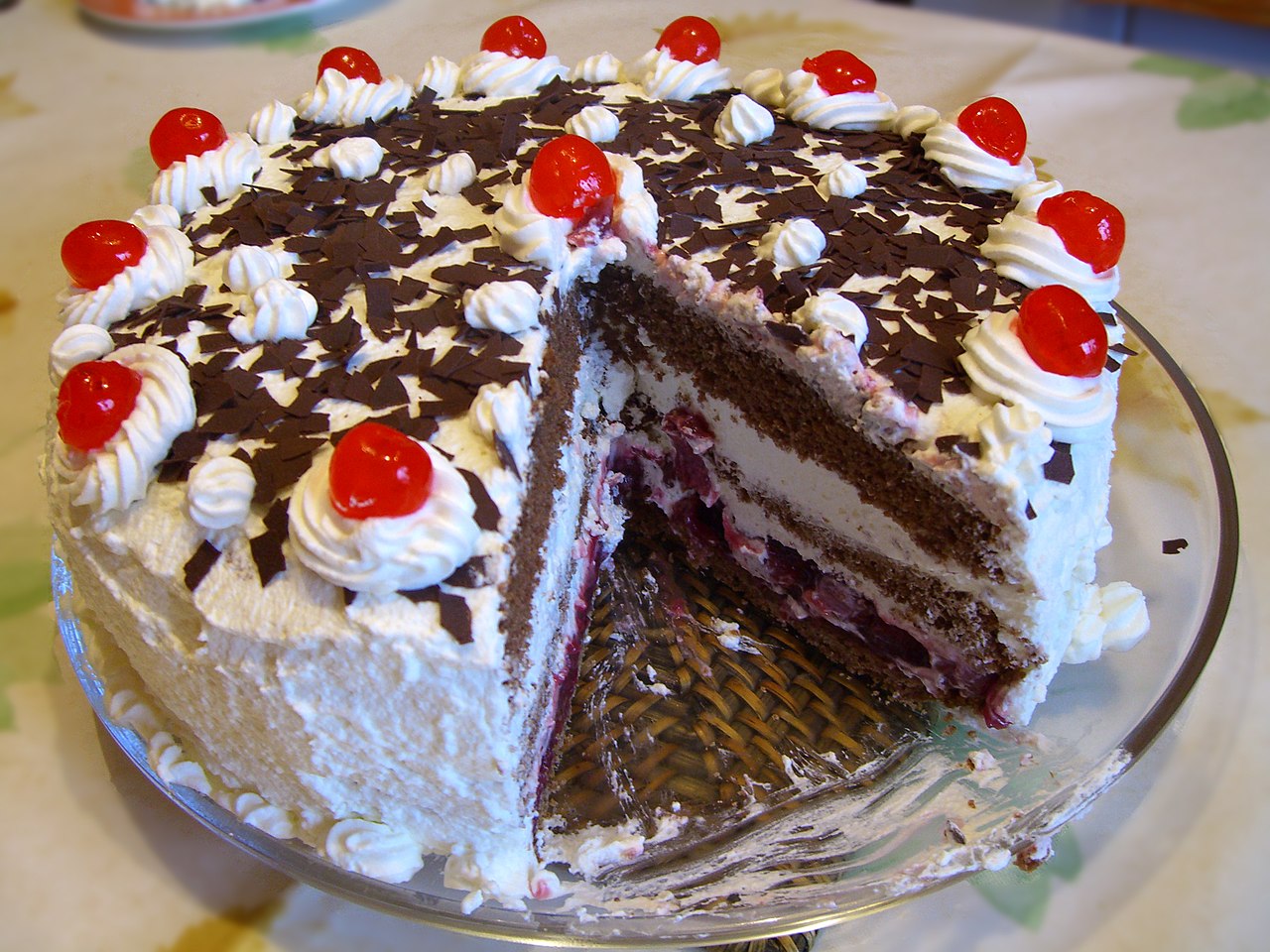
A chocolate cake with cherries and cream. One slice has been removed to reveal the layers of cake and cream inside
“Schwarzwälder Kirschtorte” by Mikel Ortega is licensed under CC BY-SA 2.0

The conclusion paragraph, like any other paragraph, needs a point or topic sentence. The point of the the conclusion paragraph is the answer to the essay question. You already stated this as the first sentence of your introduction paragraph as a bold claim which you then needed to persuade your reader was true. This time you are stating it as the logical and (hopefully) irrefutable outcome of all the evidence and arguments you have been putting forward in the essay.

For example, if the essay question was “Children are active and creative in their relationship with new media technologies. Discuss.” then the first sentence of your conclusion paragraph might be “In conclusion, we can see that children can certainly be active and creative in their relationship with new media technologies”

The remainder of the conclusion paragraph will then expand on and elaborate the point or topic sentence (just like any other paragraph would). One way to do this is to succinctly restate the key points you have made in your essay so far. This is a perfectly valid way to write a conclusion paragraph.

A stronger, but more difficult way, is to attempt a synthesis. I like to think of synthesis as being a bit like making a cake from scratch. You start out with flour and eggs and butter and sugar and maybe some other ingredients like flavourings or raisins or chocolate chips. But after you have mixed and bake them, they turn into something new and unexpected – a cake. Synthesis is about putting together the ingredients in a new and original way so that your conclusion doesn’t simply re-state the points you have made, but provides a new way of looking at them. Like baking a cake, it requires you to be a little bit creative.

It sounds hard, but it doesn’t have to be so hard. One way to attempt a synthesis is to ask yourself “Can all of my points be collected into categories?”. For example, do you have a number of points which are in favour of a certain view and some other points which are against? Or can your points be grouped into e.g. internal vs external factors, or alterable vs unalterable factors, or arguments based mainly on direct evidence vs arguments based mainly on theoretical considerations? Or maybe your points break down into three different categories, or even four (although it is harder to have many categories if you only have a few paragraphs as in a typical undergraduate essay of 2000-3000 words).

Or perhaps you notice that the essay question has different answers depending on how you look at it. Maybe you can argue that girls are creative and active in their use of new media technologies, but not boys. Or that wealthy children are, but not poor children. Or that children in the global north are but not in the global south.

Whatever your conclusion, it shouldn’t come as a complete surprise to the reader. You should have already stated your answer to the essay question in the introduction paragraph, and your paragraphs should have been structured so the reader always undertands where you have gone and where you are going. The conclusion must never contradict the essay, but sometimes it might put a delightful new spin on it.

If this article didn’t answer your question, click here

Writing With Paragraphs 3: Introduction Paragraphs

Oil painting of a man at desk writing in a notebook with a fountain pen
“Portrait of E.N. Chirikov” by Ivan Kulikov is in the Public Domain

Just like any other paragraph, the introduction paragraph needs a point or topic sentence which is expanded on in the rest of the paragraph. The point or topic of the introduction paragraph should always be your answer to the essay question. That means the first sentence of your essay should give the answer to the essay question.

For example, if the essay question was “Evaluate the claim that modern childhood is in crisis” then a good first sentence for the introduction paragraph might be “There is no evidence for the belief that modern childhood is in crisis”. Or alternatively you might write “Modern childhood is in crisis”.

You would then expand on the point or topic sentence with other sentences which support your answer. Don’t put the nitty gritty details of your answer here because those with be in the body paragraphs of your essay. But you might put definitions of key terms in your introduction, or one striking piece of evidence, or a well-chosen quotation.

And just like any other paragraphs, your introduction paragraph should end with a link sentence. But this time instead of linking back to the essay question, it links forwards into the rest of the essay.

If this article didn’t answer your question, click here