Writing In Your Own Words

Close up photo of a page of handwritten writing, with the tip of a ballpoint pen and a glimpse of fingers holding it, in the process of writing. The writing is upside down and not meant to be read but appears to be in German.
“diary writing” by Fredrik Rubensson is licensed under CC BY-SA 2.0

It’s normal to find writing in your own words hard at first. One thing that makes it much harder is when you read one sentence from the textbook, and then try to put that sentence in your own words, and then you read another sentence from the textbook and try to put that into your own words. It’s almost impossible to do that without just paraphrasing, which is a form of plagiarism. What you should do instead is to read a whole paragraph or section of the textbook and then close the textbook and try to explain the key ideas from that section in your own words. When I say “in your own words” I mean in the way you normally talk. You could use a voice recorder app on your phone to record yourself while you explain in words what you just read. Don’t try to sound “academic”, just use your normal way of talking as though you were describing something to a friend. It might sound something like this:

“Ummm, so there was this guy Booth and he did some research in London and he went round people’s houses in every street and made notes about who was living there and their ages and occupations. And he also made some notes about their ummmm I guess, like, their social class or status. And they seemed sort of judgmental calling people some people dirty  and vicious and other people he called respectable. And he coloured in a map with different colours for the different social classes so you can see where the rich people lived and where the poor people lived. It’s important because, erm,  because he was sort of inventing social science, how to do social science”

Then you can write that up into notes, tidying it up a little bit (removing the umms and errs for example) and maybe looking up the odd important detail, such as Booth’s first name and the date:

“Charles Booth did some research in London between 1886 and 1903. He went round people’s houses in every street and made notes about who was living there and their ages and occupations. He also made notes about their social class or status. These notes were sometimes judgmental, for example he called some people dirty  and vicious, and other people he described as respectable. Booth used these notes to make a map with different colours for the different social classes. The map made it so you can see where the rich people lived and where the poor people lived. Booth’s work was important because he was inventing how to do social science. (Book 1, Chapter 1, pages 9-11)”

Now those are your notes, written up in your own words. None of these sentences are the same as the sentences in the textbook. It’s all your words.

When it comes to writing an assignment, you should use your notes as the primary resource and only refer to the textbook for references and to pick up additional details. For example if you were answering a question such as “How does social science differ from other ways of investigating social life, for example journalism or art?” and you wanted to write a paragraph about Booth you might write something like:

“One way that social science differs from other ways of investigating social life is that it attempts to be systematic. For example, one of the first systematic studies of social life in London was a survey done by Charles Booth between 1886 and 1903 (Blakeley and Staples, 2014). By visiting the houses in every street and making notes about who was living there and their social status, Booth produced a colour coded map of the city which showed where the rich people lived and where the poor people lived. This differs from a journalist or an artist because they might only talk to a few people and ask them different questions each time. But Booth visited every house and collected data about the same things in each one i.e. he was systematic. In some ways though Booth’s research was more like journalism or art because he also made moral judgements about people. For example he called some people dirty  and vicious, and other people he described as respectable. Modern social scientists are supposed to avoid making moral judgments like this.”

After some practice you’ll be able to skip the voice recording part and write notes in your own words after reading a paragraph or section.

Step by step guide to writing in your own words

  • DON’T read a sentence from your textbook then try to write that sentence in your own words.
  • DO read a whole paragraph or section of your textbook at a time
  • THEN close your textbook and record yourself explaining the main points of that section in your own words
  • WRITE UP your spoken notes, tidying up the “umms” and “errs” and adding in important details checked from the textbook
  • BASE YOUR ESSAY mainly on your notes, using your textbook for additional details

If this article didn’t answer your question, click here

Related articles

Tease Apart a Quotation Free Download

Procrastination Isn’t Rest

Cartoon titled Getting Started, "Simple Tasks". On the left under a heading Non-ADHD is a figure standing atop a small set of steps. The figure looks angry and is saying "You always make excuses" "It's not that hard" "You need to stop procrastinating" "Just do it" You're just lazy". On the right under a heading ADHD is a figure standing next to a similar set of steps, except the very first step is about 20 feet high. This figure looks worried.
“Getting Started, “Simple Tasks”” by Dani Donovan

I’m a lifelong procrastinator. It’s part of my ADHD. I can spend all day achieving nothing, shaming myself the whole time. Procrastination is horrible. It’s not work because you don’t get anything done, but it’s not rest either. In fact it’s very draining. And it’s definitely no fun. I don’t allow myself to anything that’s actually fun when I’m procrastinating, because I’m supposed to be working. But I’m not doing any work either. It’s just awful.

I’ve found a very weird way of breaking the cycle – take a break. It was hard at first. I told myself “I’m not entitled to take a break. I haven’t actually done anything”. But rest isn’t a reward for working. Rest is an essential necessity for human function. So is fun. If you’ve ever told yourself “I’m not entitled to eat food/drink water/sleep because I haven’t done any work today” then that’s VERY WEIRD AND WRONG. You don’t need to earn rest and fun, food, drink, or sleep. You just need to have them, regularly.

I make myself take a break by telling myself “You’ve spent all day saying you ought to start work, so here’s one last chance – make yourself start work now or else admit that berating yourself isn’t working and take a break instead”. Sometimes I find that ten minutes later I’ve got started and I’m getting on with work. But more often I find that I’ve just completed another level of Candy Crush. So I take a break.

Here’s the difference between procrastination and a break: when you’re on a break, you’re doing what you’re supposed to be doing. You don’t have to feel guilty about having a cup of tea and watching TV when you’re on a break. You’re supposed to be having a break, and that’s what you’re doing. You can even do something actually fun (in fact that’s a great idea if you can).

Another difference is that a break has an end point. When I take a break I decide how long the break is going to be. Maybe I just need 10 minutes. Maybe I need an hour. Maybe I need a week. I decide how long the break is going to be, and when it ends. Procrastination has no end point.

I tend to procratinate in the place I’m supposed to be working. Not always – sometimes I procrastinate getting out of bed or leaving the house. But most often I’ll sit at my desk and procrastinate. When I take a break I like to get up and go somewhere else. Walk around the block. Go to a nearby cafe. Walk to the kitchen to make a drink. Change the scene and also move my arms and legs, get the blood flowing and the heart pumping. Reset.

When the break is over (I usually set a timer on my phone or something – time-blindness is another part of ADHD) I go back to my desk and I get to work. Usually I start by making a plan – I identify what I’m supposed to be doing and what are the next small tiny minuscule steps I need to take. If there’s an obstacle stopping me I identify it and decide what to do about it. Having conscious deliberate thoughts about the task, maybe even writing them down, helps get me moving. If I can get moving eventually the work has a momentum of its own. At least until the next time procrastination strikes.

And it will strike again. But now I have a strategy for it, so I just repeat the steps. Maybe I need another break. Maybe I need a longer break. Maybe I need to ask someone for help. What I definitely don’t need to do is to keep staring at my computer and mentally shaming myself. I don’t need to try harder. It doesn’t work. I need to try something else.

Steps for breaking the procrastination cycle:

  • Notice you’re procrastinating
  • Give yourself an ultimatum – either get to work or take a break
  • Decide how long the break is going to be. Set a timer
  • Move. Go somewhere else. Do something else. If possible, do something actually fun
  • Enjoy your break, free of shame or guilt. You are doing exactly what you are supposed to be doing
  • After your break return to work
  • Write down the task you are supposed to be working on
  • Write down the next tiny little action you need to do (e.g. not “answer the scary email” but just “open the email program”)
  • If you are stuck on an obstacle, write down what it is. Then write down how to resolve it
  • Keep going one tiny little action at a time until you have momentum. You’ll know you have momentum when it is easier to keep on working than it is to stop.
  • If (when) you notice you are procrastinating again, go back to step 1. But also think “do I just need to do the same steps again or do I need to do something different this time?”
  • “Something different” might include taking a longer break, switching to a different task, asking for help, etc.

If this article didn’t answer your question, click here
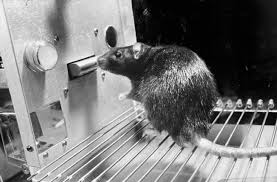
Why your tutor wrote “Not An Experiment” on your essay

Black and white photo of a rat in a Skinner Box - a type of psychology experiment
U3144362Sskinner boxCC BY-SA 4.0

An experiment is a special type of study. It’s the only kind of study that can demonstrate a cause-effect relationship. In an experiment:

  • The researcher is trying to test a cause-effect hypothesis, e.g. does lemonade make plants grow faster?
  • There are (at least) two groups (two identical groups of plants)
  • One is a control group (the group that gets watered with water)
  • One (or more) is an experimental group (the group that gets watered with lemonade)
  • There is an independent variable, which is the thing hypothesised to have an effect (the lemonade)
  • The researcher controls which group gets the independent variable and which group doesn’t
  • There is a dependent variable, which is the thing hypothesised to be affected (faster growth)
  • The researcher measures the dependent variable for both groups
  • Everything else is kept the same between the two groups (e.g. they get same amount of watering and at the same times, the same amount of light and heat and everything else that might affect growth)
  • Statistical tests are used to help decide whether any difference between the two groups is due to the independent variable or just random chance

If all these elements aren’t present then it isn’t an experiment. If you’re not sure what kind of study something is you can always just call it “a study” – that’s a catch-all term.

If this article didn’t answer your question, click here

Writing More Persuasively

I had this page bookmarked and used to share it with students to help them write better introduction paragraphs. But it was taken off the internet, so I saved it here. I believe it was originally written by Sean Evans of Union University

Your essays will be more persuasive if you focus a spotlight on your main message. Here’s what I mean. 

A strong opening paragraph that clearly states your main point does wonders for your persuasiveness. When you open a paper by previewing your basic argument you do your readers a favor. You set the terms of the debate and tell them what they can expect to find. They will then judge you on how well the rest of the paper delivers the goods. You have saved your readers the trouble of hunting for your point. And why wouldn’t you want them to hunt for it? Because they might not find it. 

Many undergraduate papers don’t open with strong paragraphs. Most opt instead for one of two openings: (a) the lofty sounding throat-clearing paragraph, or (b) the roadmap paragraph. Neither of these openings works terribly well. Here’s why. 

The Lofty Sounding Throat-Clearing Paragraph. This paragraph indulges in empty rhetoric that does not advance the argument of the paper. Here is an example of what I mean: 

The history of American foreign policy has had many influences, and over the years American presidents have had to confront many different challenges. In addition to economics and institutions, one of those challenges is geography. America is a country of great abundance that spreads from sea to shining sea. Diversity is a hallmark of the United States, a source of our greatness. It is the complex combination of these facts that has played a role in American foreign policy.

Notice that you can’t fault this paragraph on grammatical or factual grounds. The problem is that this opening doesn’t say anything distinctive, i.e., when you finish reading it, you have no idea what the author intends to argue. Even if you guessed that the author planned to talk about geography, you wouldn’t know what s/he intended to say. 

Writers typically resort to lofty sounding throat-clearing paragraph openings when they’re not sure what they want to say and are hoping that readers won’t notice. But readers do notice because they read in order to find out what you have to say. 

One way to avoid throat-clearing paragraphs is to decide before you start writing what it is you want to say. Condense it to one sentence. Make that the core of your opening paragraph. 

Now some of you won’t know what it is you really want to say until you finish writing. There’s nothing wrong with that; writing is a way of thinking. But rather than leaving your main point for your final paragraph–which readers won’t get to if you lose them in the first few pages–insert it into the opening paragraph. In other words, write your first paragraph last. 

The Roadmap Paragraph. The roadmap paragraph is a slight, but only slight, improvement over the lofty sounding throat-clearing paragraph. Here’s an example of a roadmap paragraph: 

Geography has played a long-standing role in American foreign policy. In this essay, I will do two things. First, I will discuss the nature of American geography. Second, I will explain how geography has affected American foreign policy. In sum, I will analyze and discuss the impact of geography on American foreign policy.

The roadmap paragraph improves on the lofty sounding throat-clearing paragraph because it tells the reader the topic to be discussed, i.e., geography and U.S. foreign policy. The problem with the roadmap paragraph is that it tells readers the wrong thing about the topic. It tells readers how you are going to proceed and not what you’re going to say. Readers care about the latter much more than the former.  

What Should You Do? Again, a strong opening paragraph previews the main argument for the reader. It not only names the topic, it specifies the paper’s thesis. Here’s an example of what I mean: 

Napoleon once remarked that “geography is destiny.” The history of U.S. foreign policy bears out his maxim. The United States was blessed with weak neighbors as well as a large ocean separating it from the major powers of Europe. As a result, the United States –unlike most other countries — came to view foreign policy as discretionary.

Is this paragraph going to turn Shakespeare green with envy? No. But it does succeed at its job: it stakes out terrain for the author to defend. After reading this opening paragraph, readers know not only that the topic is geography and American foreign policy but also that the author believes that geography has promoted a peculiarly American approach to foreign policy. Now the reader expects to see evidence to support that claim. 

Some Final Comments. First, if you want examples to emulate when you write an analytical essay, check out op-ed pieces in major newspapers. Second, how much space you have to state your main point depends on the length of what you are writing. When you have only 750 words you better get to it quickly. When you have 500 pages, you can take an entire chapter. Third, be specific. Too often student essays choose the general over the specific. For example, telling me that geography affects foreign policy doesn’t tell me much. Telling me that geography has promoted an approach to foreign policy peculiar to the United States tells me much more. Fourth, no, you are not required to begin your essay with a quote. Fifth, as the model paragraph shows, you can preview your argument without indulging the hackneyed ritual of writing “In this paper I will argue….” Readers are not dumb. They assume that the opinions being expressed are yours unless you tell them otherwise. 

If this article didn’t answer your question, click here