Should you include your opinions in an essay?

A heavily graffitied wall. A partly-torn sticker in the centre of the image contains a speech bubble and the words "BLAW BLAW BLAW"
Photo by Mika Baumeister on Unsplash

In general, you are expected to answer essay questions using the information in the module material, explained in your own words. You are not expected to include your own thoughts and opinions about the topics. For example, this would be inappropriate in an essay:

“I think that criminals should be dealt with severely. What gives them the right to break the rules that everyone else has to follow? If I work hard and buy nice things with the money I’ve earned, I shouldn’t have to worry about some juvenile delinquent robbing my house and getting away with a slapped wrist, community service or something like that. If it was up to me, I’d bring back flogging….”

It would be just as inappropriate to express your opinion that criminals are victims of a broken society and should be treated with compassion. You’re not supposed to include your opinions in essays, regardless of whether you suspect your tutor shares those opinions. But that doesn’t mean that you have to just parrot what it says in the module. You are supposed to read the module materials critically. That means you don’t just believe anything you read, but always ask questions about it e.g. “Does that sound convincing to me? What is the evidence to support this? Are these arguments logically watertight? What biases and assumptions might be influencing these ideas”? So for example, this would be appropriate:

“In the textbook it says that people have a right to rise up when their leaders are behaving unjustly. In a democracy, power comes from the people, so what the people do must be democratic. But I don’t agree with that. I agree with Edmund Burke who thought that social order was precious and took ages to build, and it’s really dangerous if a criminal mob can just tear down thousands of years of progress“.

That’s based on the ideas in the book, but the student doesn’t just believe what they’re told: they’ve noticed that two opposing views of the same topic are presented in the book, they’ve thought about both of them, and they’ve decided which one they find more persuasive, and why. It could be made even better by being written in a more academic form, with just a few changes:

“The radical view of rioting argues that people have a right to rise up when their leaders are behaving unjustly (Andrews, 2022 p.331). In a democracy, power comes from the people, so what the people do must be democratic. This contrasts with the conservative view of rioting that social order is precious and takes many generations to build, and it’s dangerous if a criminal mob can just tear down thousands of years of progress (Burke 2003 cited in Andews 2022, p. 334)“.

The student hasn’t said which of these views they agree with, but there’s a hint that they might agree with the view they put second. The rest of the essay, especially the conclusion, should make it clear.

References

Andrews, G. (2022) ‘Riots and disorder on the street’, in Clarke, J., Doye, Z., Hassan, I. and Woodward, K. (eds) Understanding social lives, part 2. Milton Keynes: The Open University, pp. 313–354.

If this article didn’t answer your question, click here

Active reading for social scientists

A young women wearing a black hat sits crosslegged on a leather sofa reading a book.
Photo by Seven Shooter on Unsplash

Guest blog by Dr Alan Sennett, Open University arts and social science tutor.

How many of us have had the experience of reading module materials without really taking anything in?  After a while you become conscious that you are just sitting there staring blankly at the text.  Nothing is sticking.  Or perhaps you are taking notes from the materials but realise you are just rewriting them.  But to what purpose?  You may end up with pages of detailed notes but only a vague notion of their significance for your studies.  Or maybe your study technique is to use coloured highlighters.  You find that you are marking almost everything as relevant.  The short explanation for this is that you have not planned how you are going to read.  You do not have a strategy for actively reading and critically processing text.

Active reading

It is evident that reading for academic purposes is quite different from reading for enjoyment where there are no stakes.  Students need to understand, extract, and evaluate information and arguments for quite specific purposes.  At some point we are going to use some of this material in written assignments.  To read efficiently and effectively, we must first have some sense of what we want to get out of the text.  We must also have techniques for engaging critically with the materials.  Here is one tried and tested method you might find helpful.

When faced with new materials to comprehend, one active reading method is the following:

  1. Skim read the text to get a general sense of the nature of the material.  Possibly read the introduction and conclusion and skim through the unit, chapter, article, or webpage.  But don’t take notes yet.
  2. If you are reading towards an assignment, ask in what ways this text might help.  This means already having a sense of what the assignment is asking you to do. There may be guidance notes. Use them.  Sketch out some questions to ask of the text that relate directly to the one you have been asked.
  3. Now read the text in a more intensive way.  Perhaps in bursts of 15 minutes (set a timer and take breaks).  Don’t take detailed notes yet but you might annotate the text.  I use pencil to make marginal notes on key thinkers, concepts, and theories that relate to the question.  Also mark out some key sections that may be crucial.
  4. Now close the text and write down what you recall, especially the aspects that relate to your purpose (the assignment question).  One variation here is to do this after each 15-minute burst.
  5. Finally, review the text in more detail.  You will probably now see what is most relevant for your purposes.  You may not need to read it all now, just sections.  But what you do read will mean more to you and you can now take more effective notes.  Aim for brevity in note-taking.

After working on ways to read more actively and, hence, effectively, you might want to reflect upon how you can engage more critically with the texts.  The following resources include thoughts on both active and critical reading that you may find helpful.

Some online resources

Critical reading techniques: Active reading | Help Centre | The Open University

https://mcgraw.princeton.edu/undergraduates/resources/resource-library/active-reading-strategies

https://www.ucl.ac.uk/ioe-writing-centre/critical-reading-and-writing

Writing with Paragraphs 4: Conclusion Paragraphs

A chocolate cake with cherries and cream. One slice has been removed to reveal the layers of cake and cream inside
“Schwarzwälder Kirschtorte” by Mikel Ortega is licensed under CC BY-SA 2.0

The conclusion paragraph, like any other paragraph, needs a point or topic sentence. The point of the the conclusion paragraph is the answer to the essay question. You already stated this as the first sentence of your introduction paragraph as a bold claim which you then needed to persuade your reader was true. This time you are stating it as the logical and (hopefully) irrefutable outcome of all the evidence and arguments you have been putting forward in the essay.

For example, if the essay question was “Children are active and creative in their relationship with new media technologies. Discuss.” then the first sentence of your conclusion paragraph might be “In conclusion, we can see that children can certainly be active and creative in their relationship with new media technologies”

The remainder of the conclusion paragraph will then expand on and elaborate the point or topic sentence (just like any other paragraph would). One way to do this is to succinctly restate the key points you have made in your essay so far. This is a perfectly valid way to write a conclusion paragraph.

A stronger, but more difficult way, is to attempt a synthesis. I like to think of synthesis as being a bit like making a cake from scratch. You start out with flour and eggs and butter and sugar and maybe some other ingredients like flavourings or raisins or chocolate chips. But after you have mixed and bake them, they turn into something new and unexpected – a cake. Synthesis is about putting together the ingredients in a new and original way so that your conclusion doesn’t simply re-state the points you have made, but provides a new way of looking at them. Like baking a cake, it requires you to be a little bit creative.

It sounds hard, but it doesn’t have to be so hard. One way to attempt a synthesis is to ask yourself “Can all of my points be collected into categories?”. For example, do you have a number of points which are in favour of a certain view and some other points which are against? Or can your points be grouped into e.g. internal vs external factors, or alterable vs unalterable factors, or arguments based mainly on direct evidence vs arguments based mainly on theoretical considerations? Or maybe your points break down into three different categories, or even four (although it is harder to have many categories if you only have a few paragraphs as in a typical undergraduate essay of 2000-3000 words).

Or perhaps you notice that the essay question has different answers depending on how you look at it. Maybe you can argue that girls are creative and active in their use of new media technologies, but not boys. Or that wealthy children are, but not poor children. Or that children in the global north are but not in the global south.

Whatever your conclusion, it shouldn’t come as a complete surprise to the reader. You should have already stated your answer to the essay question in the introduction paragraph, and your paragraphs should have been structured so the reader always undertands where you have gone and where you are going. The conclusion must never contradict the essay, but sometimes it might put a delightful new spin on it.

If this article didn’t answer your question, click here

Writing With Paragraphs 3: Introduction Paragraphs

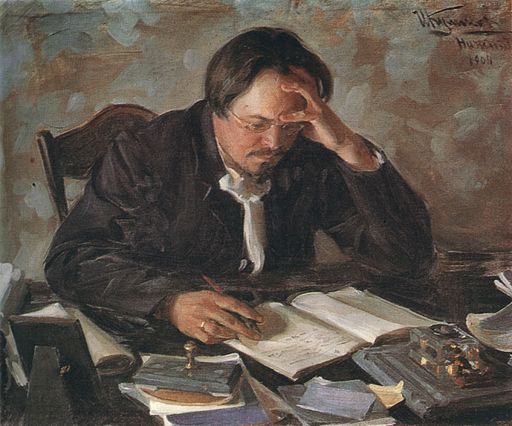
Oil painting of a man at desk writing in a notebook with a fountain pen
“Portrait of E.N. Chirikov” by Ivan Kulikov is in the Public Domain

Just like any other paragraph, the introduction paragraph needs a point or topic sentence which is expanded on in the rest of the paragraph. The point or topic of the introduction paragraph should always be your answer to the essay question. That means the first sentence of your essay should give the answer to the essay question.

For example, if the essay question was “Evaluate the claim that modern childhood is in crisis” then a good first sentence for the introduction paragraph might be “There is no evidence for the belief that modern childhood is in crisis”. Or alternatively you might write “Modern childhood is in crisis”.

You would then expand on the point or topic sentence with other sentences which support your answer. Don’t put the nitty gritty details of your answer here because those with be in the body paragraphs of your essay. But you might put definitions of key terms in your introduction, or one striking piece of evidence, or a well-chosen quotation.

And just like any other paragraphs, your introduction paragraph should end with a link sentence. But this time instead of linking back to the essay question, it links forwards into the rest of the essay.

If this article didn’t answer your question, click here

Writing with Paragraphs 2: Structuring paragraphs

A red apple on a wooden chopping board with a strip of apple peel
“apple peel” by Clara T is licensed under CC BY-ND 2.0

A tried-and-true structure for an academic essay paragraph is PEEL:

P for Point sentence

E for Evidence

E for Explanation

L for Link back to the question

The point sentence spells out simply and clearly what the point of the paragraph is going to be. It helps the reader know what to expect. The point of the paragraph must be related to the essay question (if it isn’t, delete that paragraph and find another point which is related to the question). So your point sentence is likely to include some key words and phrases from the question itself. It’s a good idea to include a signposting word or phrase in the point sentence to help the reader understand how this paragraph fits into your argument. Signposting words and phrases include “The first factor which influences….”, or “Another example of…”, or “On the other hand….” or “Finally,….”. 

A point is different from a topic. A topic can be a word or short phrase e.g. “Attachment” or “Ainsworth’s experiment”. But a point is a complete sentence that makes a claim. This is the claim you will defend in the rest of your paragraph. If you were writing an essay on the question “Describe how caregivers can influence children’s psychological development”, then one example of a point sentence might be “Additionally, caregivers can influence children’s psychological development by the way they talk to their children”.

Next, include a piece of evidence that supports the claim in the point sentence. This is where you will pick up marks for use of module materials. You may be able to do this in one sentence, or it may take you a few sentences. This piece of evidence may come from the module materials, textbook, recommended reading, or peer reviewed journal articles you found through your own searching. Check the requirements of your course to see what evidence sources are acceptable. This part of your paragraph will contain a citation to show where the evidence came from. Don’t forget to include a matching entry in your References section.

After that, provide an explanation of how the evidence you have described supports the claim in your point sentence. This is where you will pick up marks for discussion, analysis, and critical thinking. Evidence cannot speak for itself. It always needs to be interpreted. For more information about this, read Elementary, My Dear Watson. This explanation might be a single sentence, or it might take you a few sentences.

The final sentence of the paragraph links back to the essay question. Like the point sentence, this sentence probably includes key words and phrases in the essay question. It clearly states how the ideas in this paragraph help to answer the question. For example, “This shows that caregivers can positively influence children’s psychological development by talking to their children as much as possible”.

Incidentally, this is why I say that academic essay paragraphs tend to be about 200 words long. That’s about how many words it takes to do all these things. If your paragraphs are much shorter on average than 200 words, you probably aren’t doing all 4 of these things. Or you might be doing them but splitting them up over 2 or more paragraphs, in which case you need to join the fragments up. And if your paragraphs are much longer on average, you are probably either:

  1. waffling and taking too long to do these 4 things. In which case try to cut out unnecessary words and sentences to be more concise.
  2. jamming two points into one paragraph, in which case split them up so one paragraph = one point
  3. Or you might be structuring your paragraphs in terms of topics rather than points, and writing “everything I know about topic A” before starting a new paragraph on “Everything I know about topic B”.

If this article didn’t answer your question, click here

Writing in Paragraphs 1: Essay Planning

Colour photograph of a Jaguar covered with post-it notes
“The Post-It Note Jaguar (covered with sticky notes)” by Scott Ableman is licensed under CC BY-NC-ND 2.0

A paragraph is a series of sentences which build on a single main topic or point. In academic essays they tend to be about 200 words long or so. Of course, some might be a bit shorter or longer, but you can use this average figure to estimate how many paragraphs you will need in your essay. For example, a 2000 word essay will tend to have around 10 paragraphs in it. Your essay should have an introduction paragraph and a conclusion paragraph. That leaves 8 paragraphs in your 2000 word essay. Each of these needs its own main topic or point. So you need to choose 8 main points that you want to make in your essay.

One way to plan an essay is to divide the total word count by 200 and then get that number of post-it notes and stick them on the back of a door, arranged from top to bottom. Each post-it note represents one paragraph. Write “Introduction” on a post-it note and stick it at the top. Then write “Conclusion” on another one and stick it at the bottom. On the other post-it notes write the main topic or point for that paragraph, and arrange them in between. Try out different orders of post-it notes and see which order you think makes the best structure for your essay. Think about what kind of sentences you might use to link them together into a logically connected argument. You might have more topics or point than there are paragraphs, so you will need to choose which points to include and which to leave out. You can make extra post-it notes with topics on them and try swapping different combinations of topics in and out to find out what arrangement makes the best structure. When you are happy with the choice of topics and their arrangement, that is your essay plan.

If this article didn’t answer your question, click here

How to Write Clearly

A young bearded black man reading a book outdoors near a lake
Photo by Tamarcus Brown on Unsplash

The convention when writing student essays is to forget you are writing for your tutor or lecturer. After all, they already know all this stuff – they are probably the one who taught it to you. Instead you imagine you are writing for someone else.

Your imaginary reader is intelligent and educated, so you don’t need to dumb down your writing. But they are not expert in this field, so you do need to explain any concepts or jargon terms to them. You need to describe any experiments. They haven’t watched the module videos or read the textbook or the articles you have been given, so you need to summarise those in your own words.

You could imagine that your reader is a fellow undergraduate who is studying a different subject. Or you could imagine that you are writing for a past version of yourself, shortly before you began studying this module. So anything you didn’t know before you started the module will need to be explained.

When editing your essays, put yourself in the shoes of this imaginary reader and ask yourself “Would I understand this essay if I hadn’t studied this module already? Or am I assuming the reader already knows the things I know”? You may need to rewrite some parts to make it clearer.

The best way to check whether your writing is clear enough is to get someone else to read your essay, and ask if it made sense to them. If they couldn’t follow what you wrote, you may need to do some rewriting.

If this article didn’t answer your question, click here

Why your tutor wrote “Not An Experiment” on your essay

Black and white photo of a rat in a Skinner Box - a type of psychology experiment
U3144362Sskinner boxCC BY-SA 4.0

An experiment is a special type of study. It’s the only kind of study that can demonstrate a cause-effect relationship. In an experiment:

  • The researcher is trying to test a cause-effect hypothesis, e.g. does lemonade make plants grow faster?
  • There are (at least) two groups (two identical groups of plants)
  • One is a control group (the group that gets watered with water)
  • One (or more) is an experimental group (the group that gets watered with lemonade)
  • There is an independent variable, which is the thing hypothesised to have an effect (the lemonade)
  • The researcher controls which group gets the independent variable and which group doesn’t
  • There is a dependent variable, which is the thing hypothesised to be affected (faster growth)
  • The researcher measures the dependent variable for both groups
  • Everything else is kept the same between the two groups (e.g. they get same amount of watering and at the same times, the same amount of light and heat and everything else that might affect growth)
  • Statistical tests are used to help decide whether any difference between the two groups is due to the independent variable or just random chance

If all these elements aren’t present then it isn’t an experiment. If you’re not sure what kind of study something is you can always just call it “a study” – that’s a catch-all term.

If this article didn’t answer your question, click here

Writing More Persuasively

I had this page bookmarked and used to share it with students to help them write better introduction paragraphs. But it was taken off the internet, so I saved it here. I believe it was originally written by Sean Evans of Union University

Your essays will be more persuasive if you focus a spotlight on your main message. Here’s what I mean. 

A strong opening paragraph that clearly states your main point does wonders for your persuasiveness. When you open a paper by previewing your basic argument you do your readers a favor. You set the terms of the debate and tell them what they can expect to find. They will then judge you on how well the rest of the paper delivers the goods. You have saved your readers the trouble of hunting for your point. And why wouldn’t you want them to hunt for it? Because they might not find it. 

Many undergraduate papers don’t open with strong paragraphs. Most opt instead for one of two openings: (a) the lofty sounding throat-clearing paragraph, or (b) the roadmap paragraph. Neither of these openings works terribly well. Here’s why. 

The Lofty Sounding Throat-Clearing Paragraph. This paragraph indulges in empty rhetoric that does not advance the argument of the paper. Here is an example of what I mean: 

The history of American foreign policy has had many influences, and over the years American presidents have had to confront many different challenges. In addition to economics and institutions, one of those challenges is geography. America is a country of great abundance that spreads from sea to shining sea. Diversity is a hallmark of the United States, a source of our greatness. It is the complex combination of these facts that has played a role in American foreign policy.

Notice that you can’t fault this paragraph on grammatical or factual grounds. The problem is that this opening doesn’t say anything distinctive, i.e., when you finish reading it, you have no idea what the author intends to argue. Even if you guessed that the author planned to talk about geography, you wouldn’t know what s/he intended to say. 

Writers typically resort to lofty sounding throat-clearing paragraph openings when they’re not sure what they want to say and are hoping that readers won’t notice. But readers do notice because they read in order to find out what you have to say. 

One way to avoid throat-clearing paragraphs is to decide before you start writing what it is you want to say. Condense it to one sentence. Make that the core of your opening paragraph. 

Now some of you won’t know what it is you really want to say until you finish writing. There’s nothing wrong with that; writing is a way of thinking. But rather than leaving your main point for your final paragraph–which readers won’t get to if you lose them in the first few pages–insert it into the opening paragraph. In other words, write your first paragraph last. 

The Roadmap Paragraph. The roadmap paragraph is a slight, but only slight, improvement over the lofty sounding throat-clearing paragraph. Here’s an example of a roadmap paragraph: 

Geography has played a long-standing role in American foreign policy. In this essay, I will do two things. First, I will discuss the nature of American geography. Second, I will explain how geography has affected American foreign policy. In sum, I will analyze and discuss the impact of geography on American foreign policy.

The roadmap paragraph improves on the lofty sounding throat-clearing paragraph because it tells the reader the topic to be discussed, i.e., geography and U.S. foreign policy. The problem with the roadmap paragraph is that it tells readers the wrong thing about the topic. It tells readers how you are going to proceed and not what you’re going to say. Readers care about the latter much more than the former.  

What Should You Do? Again, a strong opening paragraph previews the main argument for the reader. It not only names the topic, it specifies the paper’s thesis. Here’s an example of what I mean: 

Napoleon once remarked that “geography is destiny.” The history of U.S. foreign policy bears out his maxim. The United States was blessed with weak neighbors as well as a large ocean separating it from the major powers of Europe. As a result, the United States –unlike most other countries — came to view foreign policy as discretionary.

Is this paragraph going to turn Shakespeare green with envy? No. But it does succeed at its job: it stakes out terrain for the author to defend. After reading this opening paragraph, readers know not only that the topic is geography and American foreign policy but also that the author believes that geography has promoted a peculiarly American approach to foreign policy. Now the reader expects to see evidence to support that claim. 

Some Final Comments. First, if you want examples to emulate when you write an analytical essay, check out op-ed pieces in major newspapers. Second, how much space you have to state your main point depends on the length of what you are writing. When you have only 750 words you better get to it quickly. When you have 500 pages, you can take an entire chapter. Third, be specific. Too often student essays choose the general over the specific. For example, telling me that geography affects foreign policy doesn’t tell me much. Telling me that geography has promoted an approach to foreign policy peculiar to the United States tells me much more. Fourth, no, you are not required to begin your essay with a quote. Fifth, as the model paragraph shows, you can preview your argument without indulging the hackneyed ritual of writing “In this paper I will argue….” Readers are not dumb. They assume that the opinions being expressed are yours unless you tell them otherwise. 

If this article didn’t answer your question, click here